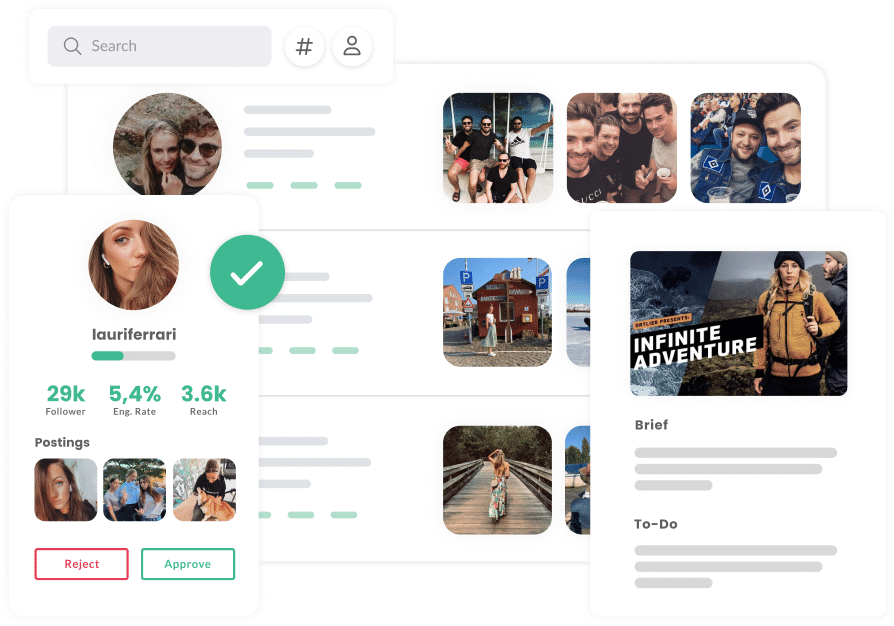
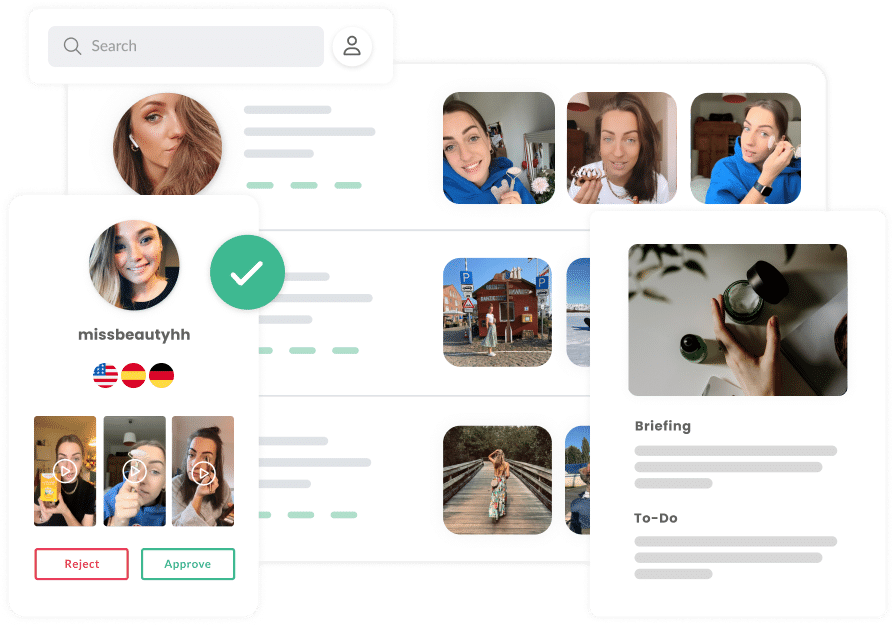
You know the feeling. You brief a creator, the content turns out great, the campaign runs smoothly — and then, after one Instagram post, everything ends up in a folder somewhere on your desktop, collecting dust.
That same video could be living on your website, delivering the final purchase argument on your product detail page, and converting as an ad creative at the same time. Creator marketing isn’t just about producing content — it’s about thinking each asset through so it works across every channel where you’d use traditional brand assets, from social to out-of-home.
Usage Rights as the Foundation: Clarify First, Activate Second
Before creator content appears anywhere, usage rights need to be clarified. How far you can repurpose creator content depends directly on what you’ve agreed to upfront — channel by channel, usage period, exclusive or non-exclusive.
The rule of thumb: the broader the usage rights, the better. Renegotiating is expensive and time-consuming. When working with content creators, you should factor in usage rights from the start — not as an afterthought, but as a fixed part of every briefing. Everything you need to know about legally using creator content on Instagram is covered in our guide to image rights on Instagram.
Without clean usage rights, even the best creator pieces fall short of their potential. With them, you have fully-fledged brand assets that can be used flexibly across channels.
How Does Creator Content Work on a Website?
Creator content on your website keeps users engaged longer — and increases average order value.
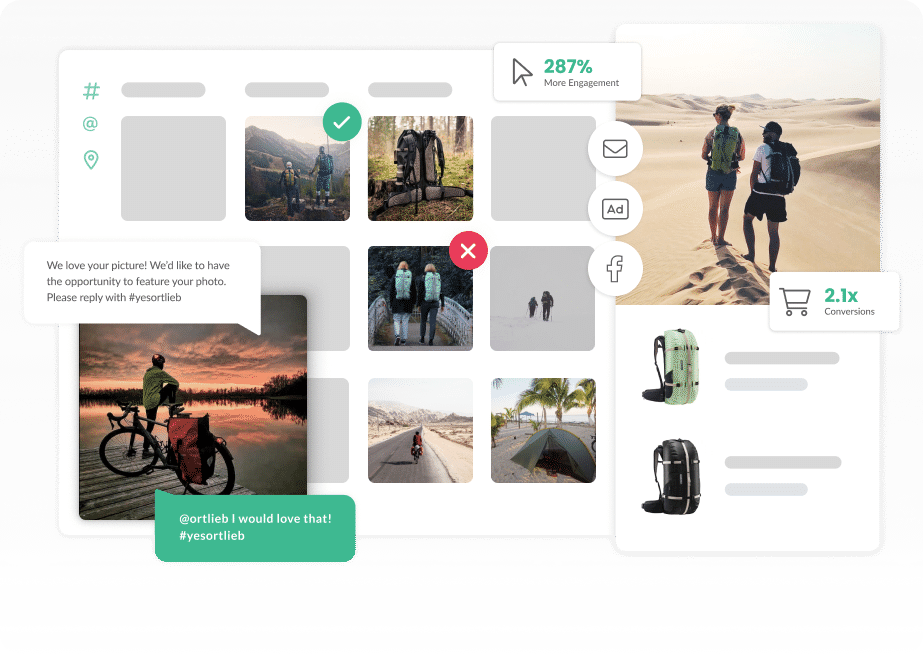
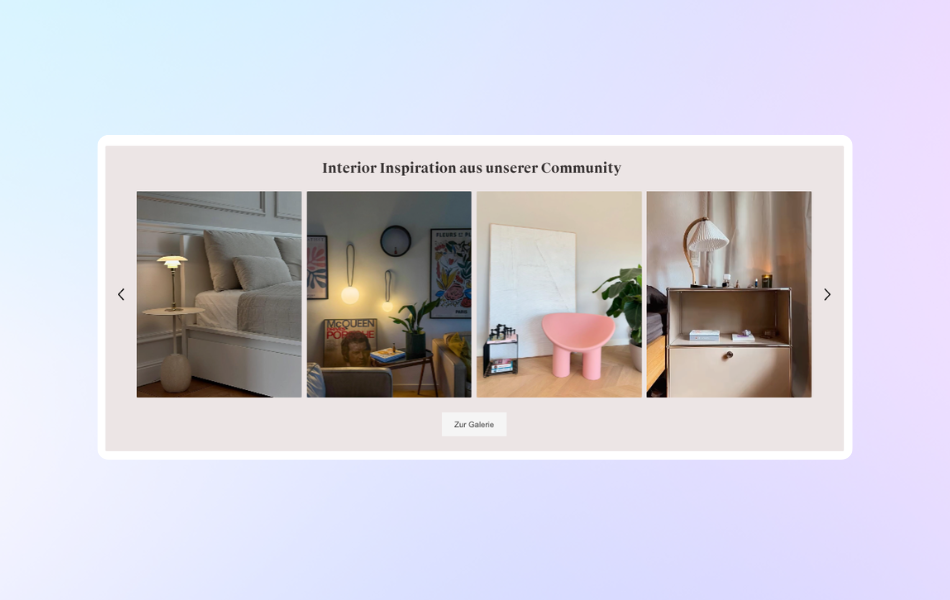
Design Bestseller is a great example: the furniture brand uses squarelovin Shop The Look to collect community content and embed it as a full-page gallery with direct product links. The result: users interact with an average of five pieces of media per session — a depth of engagement that’s nearly impossible to achieve with traditional product photography.
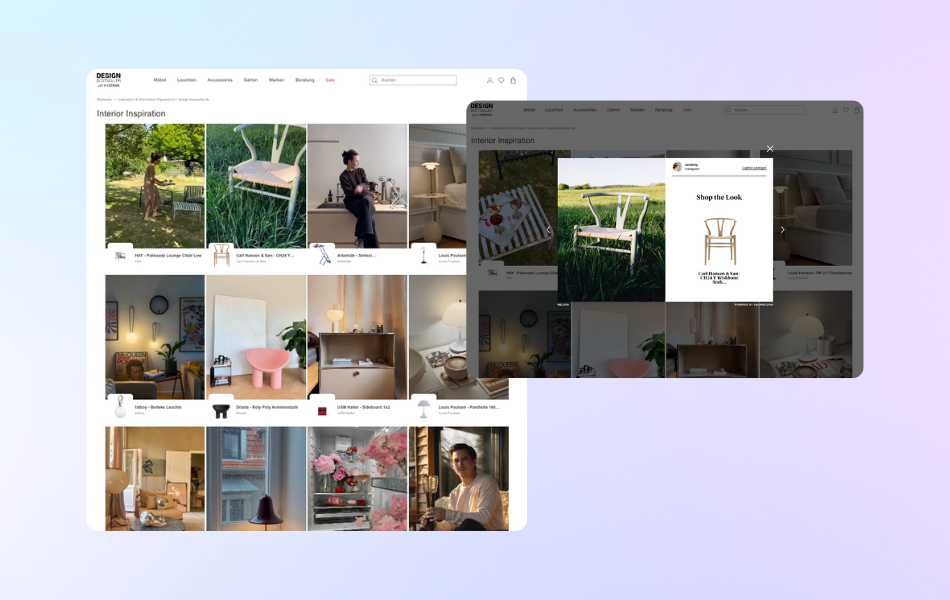
When people see real living rooms instead of showrooms, they stay longer. And the longer they stay, the more they buy.
The format can also be segmented by theme: one stream for living room inspiration, one for Christmas décor, one for “new arrivals.” Each stream targets a specific purchase intent — without producing any new content. The creator content that already exists is simply sorted strategically and made accessible.
For brands in home & living, fashion, or lifestyle, this is a direct upgrade to website performance — and a strong case for Shop The Look on website as a permanent part of any creator content strategy.
Why Does Creator Content Work Especially Well on Product Detail Pages?
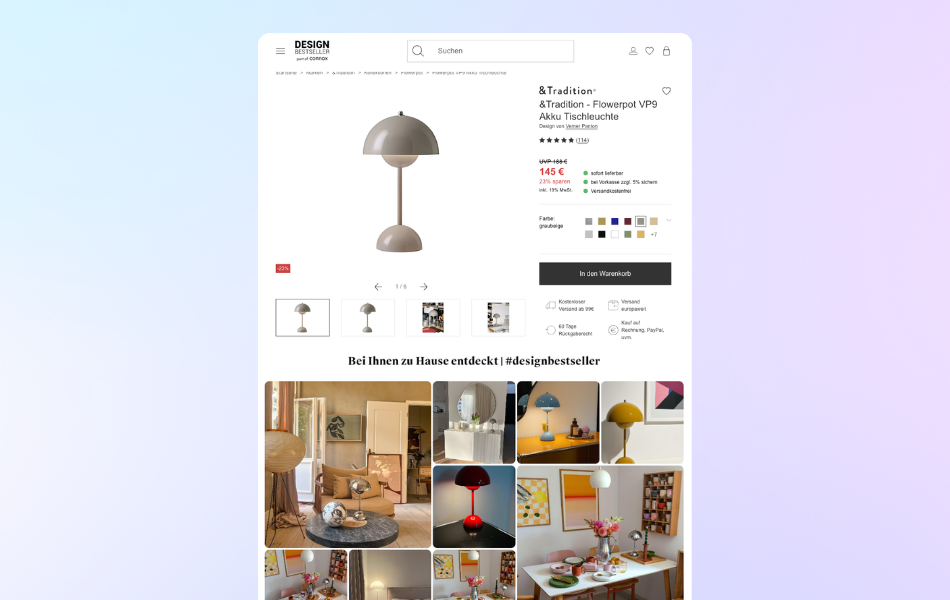
PDPs are the moment just before the purchase decision — creator content delivers exactly the final argument needed there.
Someone landing on a product page is already interested. What’s holding them back: Does this really suit me? Does it work in practice? Does it look like this on real people?
This is where authentic creator content does what no studio photo can. Especially for clothing, skincare, and makeup, it offers identification potential through real people in real contexts — no perfect lighting, no Photoshop. That lowers the barrier to purchase, because buyers see themselves in the content. Products featuring UGC on the product page convert up to 270% better than those without — a difference that shows directly in revenue.
The same applies to products that need explanation: creators showing how a tool works, taking a supplement, or assembling a piece of furniture clear up doubts more efficiently than bullet points on a product page. Creator content in e-commerce at this stage isn’t a nice-to-have — it’s the format that comes closest to a genuine recommendation.
Creator Content in Newsletters and Email Marketing
Email is one of the most direct channels a brand owns — and one of the most underutilized for creator content.
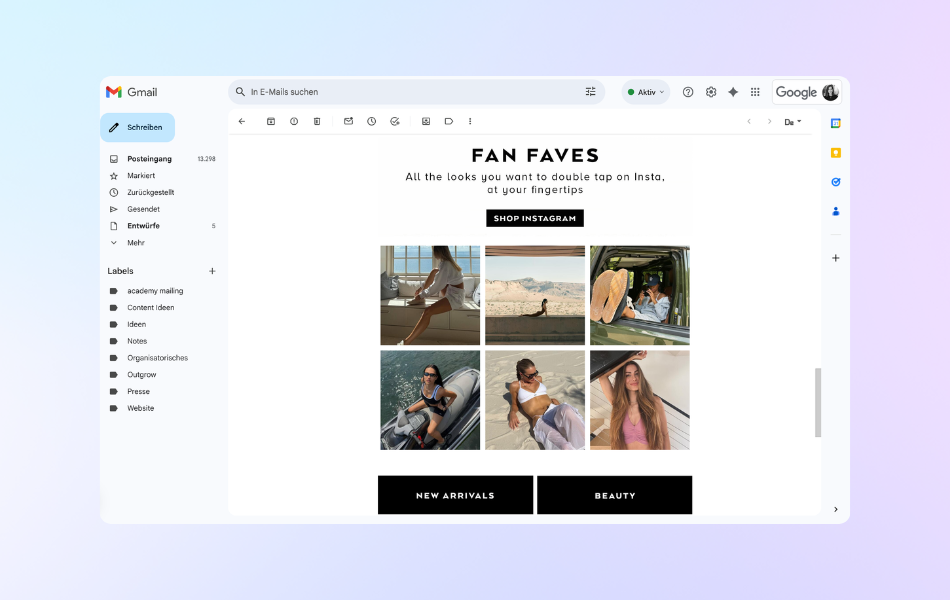
ALO Yoga already does this: the activewear brand embeds community content from social media into order confirmation emails under the label “Fan Faves.” The moment right after a purchase is ideal: the recipient is in a positive emotional state, and their trust in the brand has just been reinforced. Creator content in this moment isn’t a push — it feels like a natural extension of the purchase decision. And it creates a direct incentive for the next purchase. Studies show that UGC in emails increases click-through rates by up to 78% — significantly more than product shots the recipient has already seen.
The same principle applies to other email touchpoints: re-engagement campaigns, seasonal newsletters, product launches. Wherever trust and inspiration are needed, creator content outperforms familiar product imagery.
One prerequisite: usage rights must explicitly cover the email channel. For many brands, this is still a gap in their briefing — and therefore wasted potential. What this means in practice is covered in our guide to image rights on Instagram.
Creator Marketing in Social Ads: Less Production, More Performance
Creator content as ad creative works — that’s no longer a secret. What matters is how it’s prepared for the paid channel.
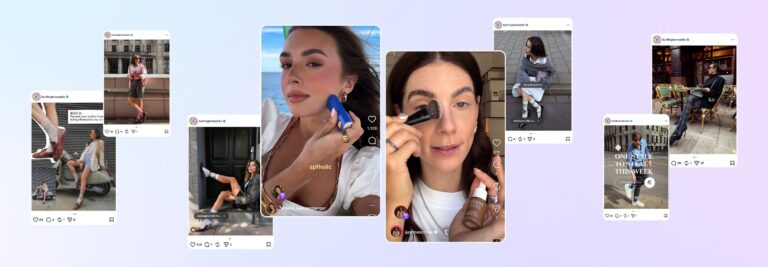
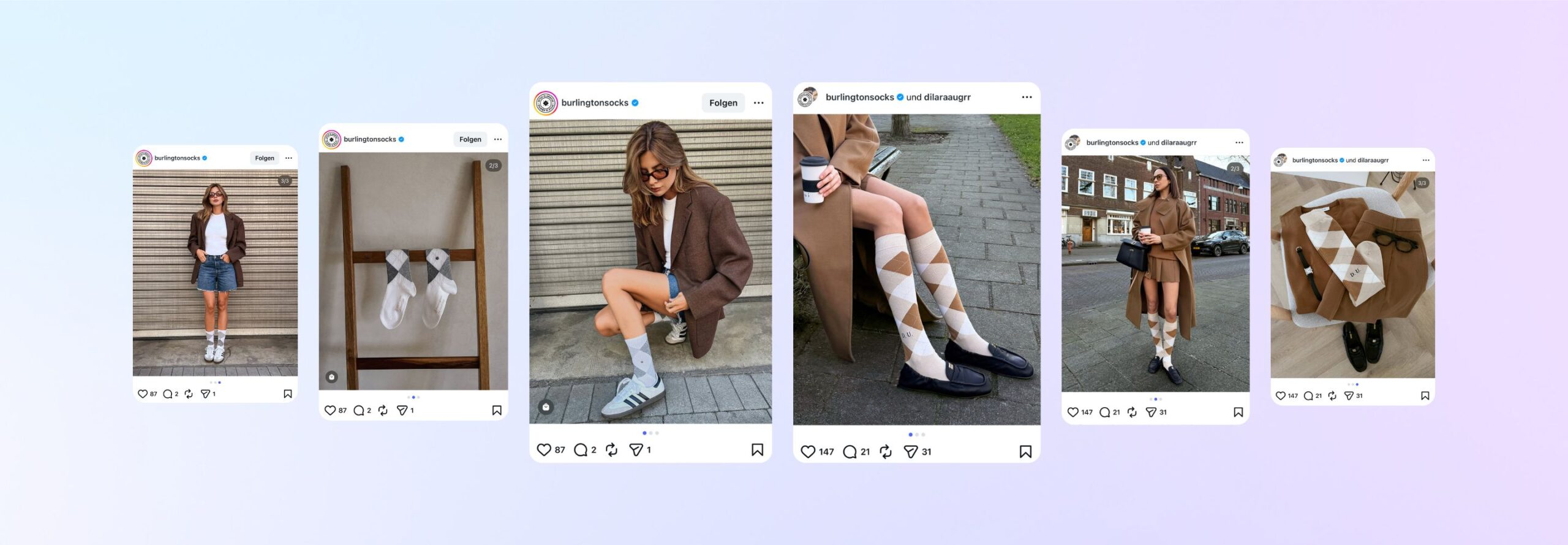
Burlington Socks demonstrates a simple, effective approach: creator content is enhanced with a logo and text overlay and used directly as a finished ad visual. No complex re-editing, no new shoot — existing content is made paid-ready with minimal effort. UGC ads achieve on average 4× higher click-through rates and 50% lower cost-per-click compared to traditional product advertising. Creator marketing pays off doubly here: you save on production costs while gaining creatives that actually perform.
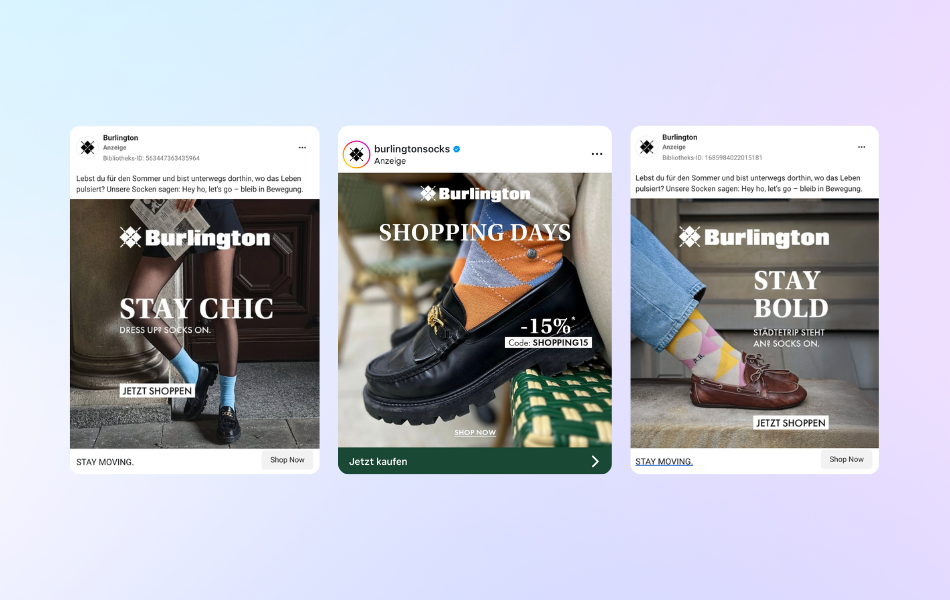
That’s the core of an efficient creator content strategy in the ads context: preserve authenticity, make brand identity clear, sharpen the message. Creator content in social ads converts better on average than classic brand creative — because it looks less like advertising.
This is also where usage rights matter: which platforms can the content cover? Meta, TikTok, Pinterest, YouTube pre-roll? The broader the rights, the more flexible the deployment — and the higher the ROI on the original campaign budget.
Creator Content in Your Own Feed: Created Once, Used Multiple Times
The most obvious use case is often the least explored: your own social feed.
Burlington Socks shows what this looks like in practice. A creator piece is first posted in its original form — no overlay, no branding intervention, the content works exactly as it was created.
Weeks or months later, the same visuals reappear as part of a carousel on a focus topic, embedded in a curated context alongside other pieces. A single post becomes a reusable element in the content system.
This extends the lifespan of every asset and reduces production pressure — because good content doesn’t have to be posted once and disappear.
There’s an often-overlooked detail of usage rights at play here: simply posting and modifying or combining content are two legally distinct things. Anyone cropping creator pieces, embedding them in carousels, or overlaying them with their own text needs explicit permission from the respective creator. If that’s not in the original briefing, renegotiating is the only option. What this means in concrete terms is explained in our guide to image rights on Instagram.
Conclusion: Repurposing Creator Content Isn’t Optional — It’s the Standard
Brands that use creator campaigns exclusively for one-time organic posts are leaving the majority of their value on the table. The content is there, the quality is right — what’s missing is a systematic repurposing strategy, thought through from rights clarification to cross-channel activation.
Brands that implement this consistently lower their content production costs, boost performance across multiple channels simultaneously, and build a library of assets that delivers results long-term.