Seven-figure report, green checkmark next to the CPM, format on point. Every reason to celebrate. And yet the weekly marketing meeting is heavy with silence. Why? Because conversions are in the basement, the comment section is dead, and the expensive content feels like a foreign object in the feed.
This frustrating feeling is familiar to countless marketing teams. It’s not a failure — it’s the symptom of a structural mistake that happens long before the first briefing. It starts with one fundamental question: did you actually want to buy an influencer’s reach, or did you want to book a professional content creator?
Influencer and Creator: Why We Throw Two Things in the Same Pot
The reason is obvious: both appear in feeds. Both talk about products. Both get paid by brands. So they get treated as synonyms — in briefings, in budget planning, in job titles.
But the logic behind the booking is fundamentally different.
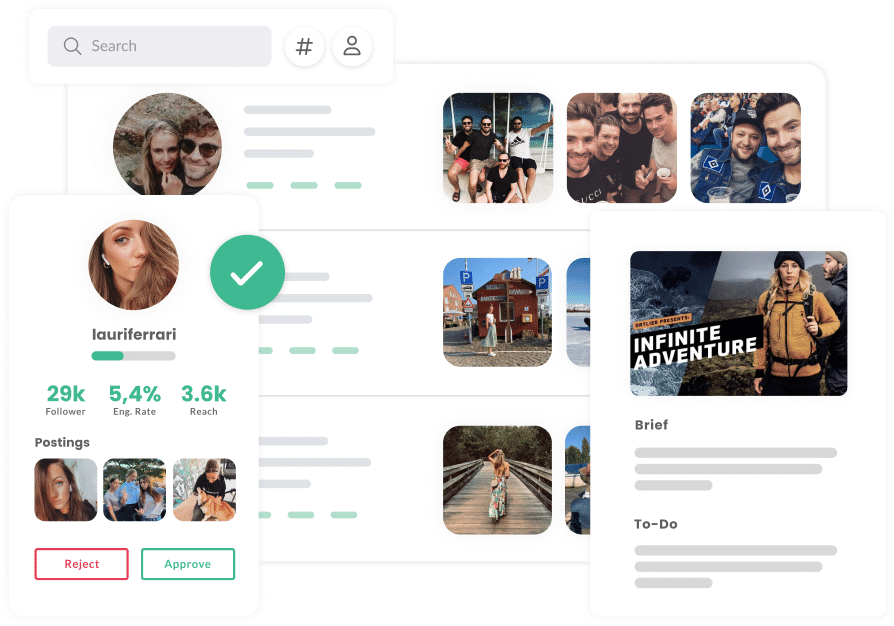
An influencer is booked by a brand for their community and reach. The output lands on the creator’s channel — and has impact there because the audience trusts them. The brand is buying access: to an audience that already exists, is already engaged, already follows a voice. In return, the influencer ideally gets largely free rein over the content. The primary goal: reach and conversions.
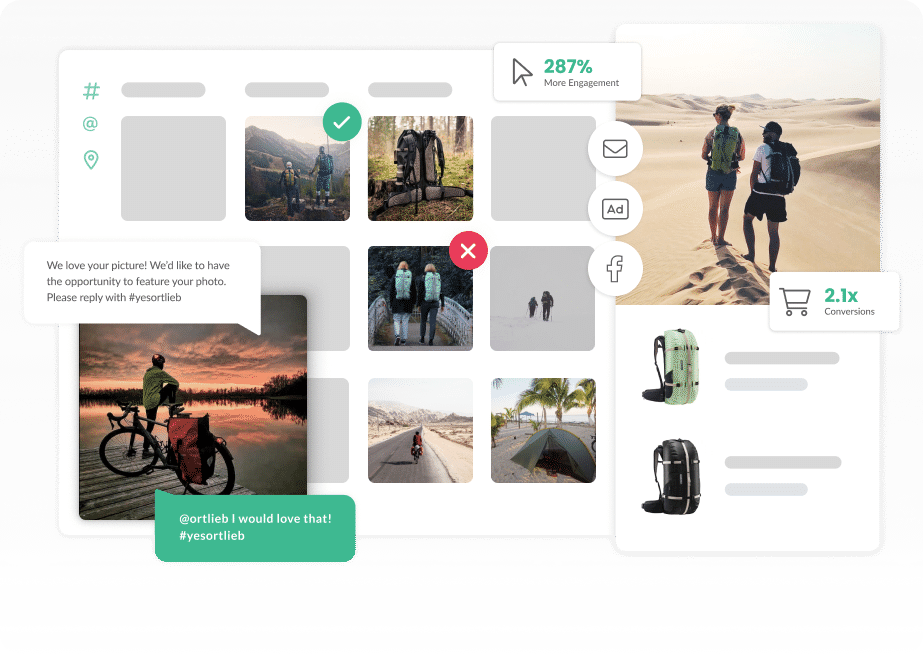
Booking a content creator, on the other hand, means pure content production — usually without posting on their own channel. They work with a concrete brief, clear requirements, defined formats. The finished content asset is handed over to the brand and deployed on the brand’s own channels: as paid social, website content, in email campaigns, or in a retail context. Want to know what formats that can include? The 5 Most Important Steps for a Successful Creator Program is a good starting point. Primary goal: content asset creation and brand building.
Both models have their place. Confusing the two is the problem.
When to Book an Influencer — and When to Book a Content Creator
What is the primary campaign goal?
Visibility, reach, and conversions call for influencer bookings. High-quality, brand-owned content for paid social campaigns or your own webshop calls for booking a content creator.
How much control does your brand need over the output?
If you’re sending a tight brief — specific claims, mandated hashtags, defined visual language — you’re not buying influencer marketing. You’re buying content production. That’s legitimate, but you should know it before paying someone with a hundred thousand followers to imitate your brand’s visual style.
On whose channel should the content ultimately shine?
This is where things diverge: if the video is going live on the creator’s profile, you’re in classic influencer territory. If the content is going to be distributed on the brand’s own channels, you need creator logic. Anyone looking for the right influencer for the first scenario will find a useful starting point in Stop Searching, Start Finding: The Power of Community Monitoring.
This distinction sounds trivial at first, but it has fundamental consequences in practice:
- Contracts & buy-outs: When you book a content creator, you typically purchase full usage rights for your own advertising (paid social) upfront. With a pure influencer collaboration, usage on third-party channels is often strictly limited — or has to be expensively licensed after the fact.
- Expectations: On a brand channel, what counts is the craft and platform-fit of the asset. On a creator’s channel, what counts is organic interaction with the existing community.
Getting this logic wrong means either paying for reach you never use, or risking legal issues due to missing usage rights.
What This Means in Practice
Influencer campaigns need trust. Not just trust in the reach, but trust in the person — in their ability to integrate a product into their world without it feeling forced. Over-briefing destroys exactly that. The result: content that feels like an ad on a channel whose audience won’t tolerate ads. Reach without resonance.
Booking a content creator, on the other hand, requires the opposite: precision. A creator without a defined purpose produces content into a void. What’s missing isn’t a creative constraint — it’s a clear brief. Which format? Which platform? Which tone? Where will the asset be used? Our piece on Visual Content Production walks through how to structure exactly this. Without these answers, you don’t get a usable asset — you get a half-baked compromise that doesn’t perform. der nicht performt.
This sounds like theory — but it’s the most common cause of disappointing results in creator marketing. An influencer working with too many restrictions loses their authenticity. A creator booked without a clear brief produces without direction. Both mismatches are avoidable — if the booking logic is right from the start. Why it pays to be bolder here is something we explore in depth in 5 Reasons Why You Need to Be Bolder in Creator Marketing.
DACH Perspective: Why the Distinction Matters Even More Here
German-speaking audiences are particularly sensitive to obvious advertising. Current studies from the DACH region consistently show: consumers recognise sponsored content quickly — and discount it when it doesn’t feel authentic. This isn’t about paid content per se, but about paid content that tries to look like it isn’t.
Three examples make the difference concrete:
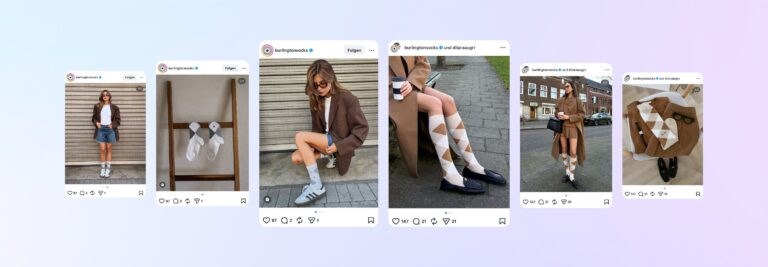
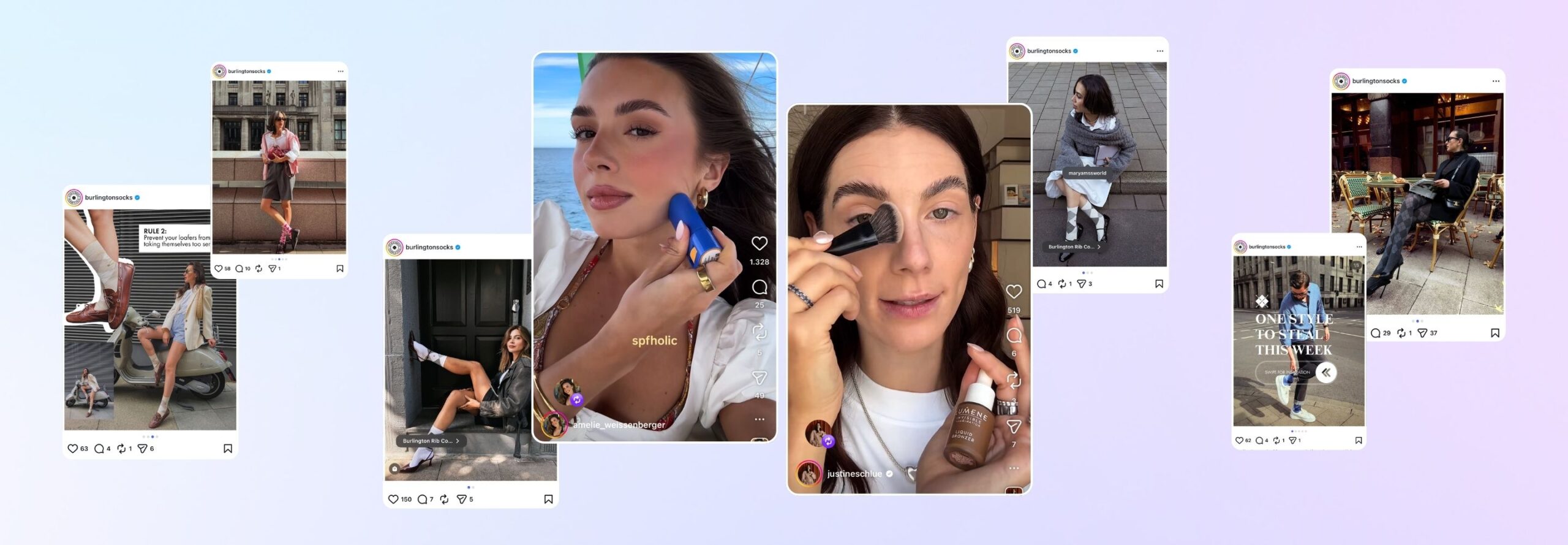
Burlington — Creator Logic: Burlington booked content creators who work precisely within the brand’s visual language. The resulting posts fit seamlessly into the brand feed — same aesthetic, same tone, no visible break. The content was produced for Burlington’s own channels, and that’s exactly why it works: because the creators weren’t meant to bring their own personality, but Burlington’s.
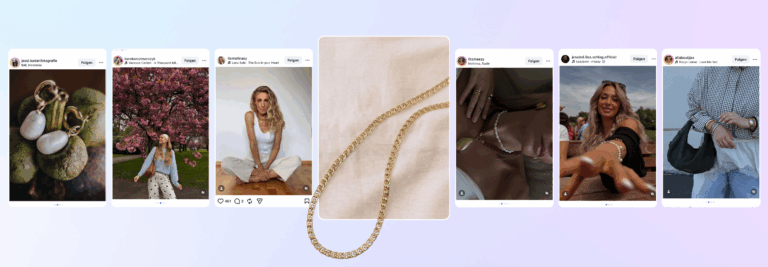
Kiehl’s & @frgretel — Influencer Logic: @frgretel delivered her Kiehl’s collaboration entirely in her own style — with the humour and quirks her community has followed for years. The creams appear in a reel that feels exactly like every other post on her channel. It works because Kiehl’s allowed it: no tight brief, no imposed brand voice, just trust in the person and her community.
Adobe & @mirellaprecek — Influencer Logic: Adobe takes the same approach. @mirellaprecek presents Adobe Acrobat Studio in a reel — humorous, ironic, entirely in her unmistakable tone. Anyone who follows her channel recognises it immediately: this is her content, not Adobe’s marketing department. That’s the point. Adobe didn’t buy her visual language — they bought her perspective, and the community that has been following and understanding that perspective for years.
All three campaigns are successful — for completely different reasons. Burlington bought control over visual language. Kiehl’s and Adobe bought access to engaged communities who trust the influencer’s humour and personality. Confusing these two logics means getting neither.
At the same time, demand for high-quality, authentic creator content for brand-owned channels has risen considerably over the last two years — driven by the saturation of classic paid social and the growing importance of organically-feeling content on TikTok and Instagram Reels. How the competition between AI-generated and human content plays out in this context is something our piece on Human-First vs. AI Content: Which Content Strategy Wins in 2026? explores in detail. Brands trying to meet this demand with influencer bookings will be systematically disappointed. The right approach is to book a content creator — with a clear brief, a defined asset goal, and a rights agreement that covers deployment on brand channels from the outset.
The DACH market has a particular characteristic that sharpens this further: influencer marketing strategies at many brands here have historically been built around macro-influencers — reach and awareness first. According to the State of German Influencer Marketing 2026, spending on influencer marketing in Germany is set to grow from €718 million (2025) to a projected €1.02 billion (2030) — growth that is only sustainable if brands understand the booking logic behind it.
The shift towards booking content creators instead still feels new to many teams. Not because of a lack of interest, but because the terms haven’t been clearly enough separated to enable conscious decisions.
Before the next briefing, there is one question that overrides all others: what am I actually buying — reach or content?
The answer determines whether you should book an influencer or a content creator. Everything else follows from there.