



Your first campaigns? Went great. Five creators, a tidy spreadsheet, everything under control.
But as soon as you scale the budget, onboard more creators, and simultaneously handle content approvals, contracts, and payments, something inevitable happens: the spreadsheet becomes your biggest obstacle.
No blame on Excel — it’s a powerful tool for finance and data analysis. But it simply wasn’t built for professional creator management. According to the Influencer Marketing Benchmark Report 2026, brands use an average of more than 5 different tools to manage a single creator campaign from start to finish. The result: up to 40% of campaign time disappears into manual coordination, endless follow-ups, and data scattered across servers, inboxes, and WhatsApp chats.
If you want to scale in 2026, you need more than a well-maintained spreadsheet. You need automated workflows, a central data foundation — and a creator management setup that grows with your goals.
Why Excel Is Holding Your Creator Management Back
The problems with Excel in creator management rarely appear all at once. They creep in — until nothing works anymore.
1. Data silos instead of a single source of truth.
Contracts sit on the server. Media kits trickle in via email. Agreements happen over WhatsApp, Slack, comments — somewhere. Nobody has the full picture, and every campaign starts from scratch. What’s missing is a central system that brings all information together in one place.
2. Static screenshots instead of real performance data.
You ask creators for updates, wait days for responses, and manually enter numbers — only to find the story reach has already changed. Your spreadsheet always shows yesterday’s data.
3. Flying blind on ROI.
This is the critical one: around 50% of brands struggle to connect creator content to measurable performance results. Without reliable tracking, budget planning is pure gut feeling — and the conversation with your CMO about channel growth becomes a recurring headache.
How to build briefings that give creators more creative freedom while still delivering better results is covered in our article on Creator Marketing: Why Bolder Briefings Pay Off.
Excel vs. squarelovin Creator Manager: The Direct Comparison
| Criteria | Excel & manuelle Tools | squarelovin Creator Manager |
| Tool landscape | 5+ separate tools | All-in-one Creator CRM |
| Campaign setup | Weeks of preparation | A few days to launch |
| Follow-ups | Manual emails, WhatsApp, DMs | Automated campaign workflows |
| Performance Data | Screenshots on request | Live reporting in real time |
| Contracts & compliance | Individual documents, manual | Ready-made templates, legally sound |
| Payment processing | Manual invoice management | Integrated payout system, worldwide |
| ROI tracking | Estimates & feeling | Tracking from click to conversion |
| Creator database | Nameless spreadsheet | Structured CRM with tags, lists, ratings |
Anyone working with manual processes can’t scale creator management without proportionally more resources.
How Automated Workflows Make Creator Management Predictable
The move from spreadsheet chaos to structured creator management doesn’t require a months-long migration. It requires the right infrastructure — and a clear plan.
Build Your Own Creator Ecosystem
Away from the nameless list. A good Influencer CRM, like the squarelovin Creator Manager, lets you nurture long-term partnerships with intention — through structured creator profiles, lists, tags, and ratings. At a glance, you know who’s right for which campaign, who performed well last time, and who you haven’t contacted yet.

That’s the difference between starting from zero every time and actual relationship management. If you’re still figuring out which creators fit your brand, our article on Influencer Discovery with 7x Higher Cooperation Rates is a good starting point.
Smart Automation from Briefing to Payout
The biggest time sink in creator management is the process between “campaign planned” and “content live.” Sending briefings, giving feedback, approving content, getting contracts signed, checking invoices, releasing payments — all manual? Not anymore.

Digital approve/reject workflows replace endless email threads. Ready-made contract templates provide legal security without lawyer hours. And an integrated payout system handles payments, taxes, and compliance worldwide automatically — whether you’re working with five creators or five hundred.
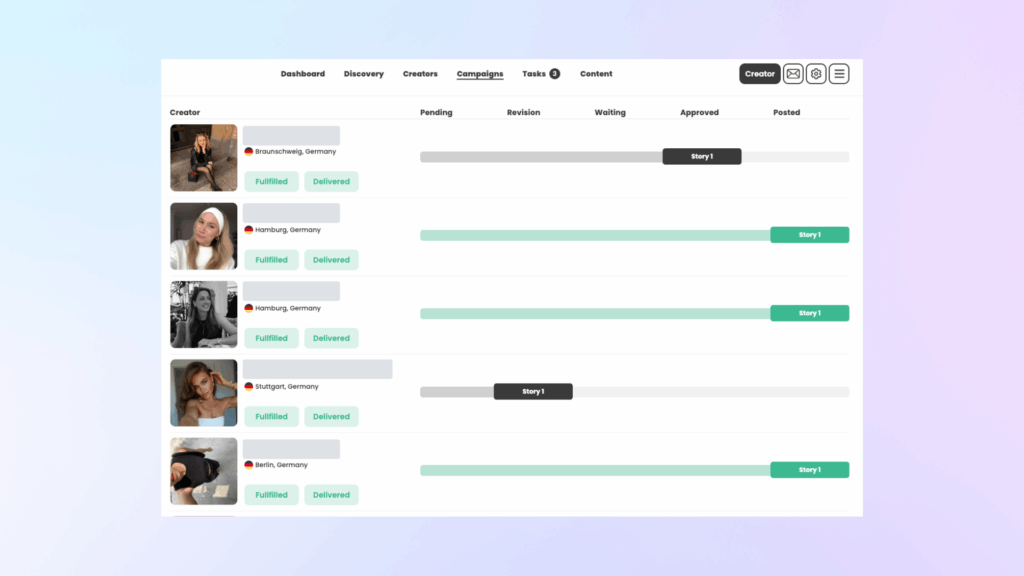
What this looks like in practice is covered in our article on the 5 Most Important Steps for a Successful Creator Program.
Data-Driven Decisions Through Real-Time Reporting
No more guessing. With squarelovin’s automated conversion tracking, you can see exactly which creator drives which revenue — from the first click to the final conversion. Fake follower checks and demographic insights help you choose the right partners before a campaign even starts, instead of distributing budget on hope.
That’s the difference between creator marketing as a cost centre and creator marketing as a measurable performance channel. How to calculate your influencer marketing ROI — and which KPIs actually matter — is laid out in detail in this article.
The ROI Check: What Structured Creator Management Actually Delivers
Numbers speak louder than any spreadsheet:
- −40% operational workload compared to manually managed campaigns
- Up to +30% more revenue through data-driven, targeted creator campaigns
- +25% higher engagement rate when creator content is systematically distributed across owned brand channels
According to a Nielsen study, 92% of consumers trust recommendations from people over traditional advertising — creator content is a real conversion driver, not a nice-to-have. But it only works when you know which creators actually perform.
That’s exactly what separates brands that run creator management as a strategic channel from those that start from scratch every campaign: when you understand who converts and why, you can shift budgets with confidence. You stop betting on reach and start investing in impact.