Anyone who wants to start with creator marketing will sooner or later run into the same question: What does it actually cost? The answer is frustratingly simple — it depends. But that’s no reason to set your creator budget without any sense of direction. Knowing the key factors lets you set realistic expectations, negotiate better, and build partnerships that last longer than a single campaign.
Barter Deals: Less Leverage Than Before
A few years ago, the classic exchange — product for content — was a straightforward way into creator collaborations. That’s changed. Many creators today operate like small businesses: they produce professional content, implement brand messages strategically, factor in usage rights, and calculate their effort the same way any service provider would. As a result, willingness to work for product-only deals has declined.
That doesn’t mean barter deals no longer work. For established brands with products where the product value alone represents a genuine form of compensation — think high-end electronics, sports equipment, or premium beauty — they can still make sense. For smaller brands, though, the planning and acquisition effort is significantly higher. According to the Influencer Marketing Benchmark Report by Influencer Marketing Hub, the creator economy has professionalized rapidly in recent years — a trend that directly affects compensation expectations. A practical note: simply leaving the word “paid” out of the subject line of an outreach email noticeably reduces open rates — more on that in Stop Searching, Start Finding: The Power of Community Monitoring.
Fair compensation is also more than an economic factor — it’s a signal. Creators who feel valued bring more to the table: better ideas, more reliable collaboration, genuine brand loyalty. If you want to build a creator community around your brand for the long term, this is where it starts.
What Really Influences Creator Costs
Pricing in creator marketing isn’t a black box — even if it often looks that way from the outside. It follows a logic, and knowing the levers lets you assess offers more accurately and craft briefs that fit your budget.
- Format and effort:
A video costs more than a photo — and a video with face-to-camera, voice-over, and text overlays costs more than a simple clip edit. The higher the production effort, the higher the fee. - Creative development:
If you require a specific setting, an event tie-in, or elaborate props, the price goes up. Briefs that leave the creator conceptual room tend to be cheaper — and often produce better results. - Post-production:
Raw files are cheaper than fully edited content. If you want ad-ready material — with cuts, subtitles, overlays, and optimized formats — factor that in from the start. - Feedback rounds:
More revision cycles mean more effort. A precise brief upfront beats costly revisions later. - Usage rights:
This is frequently underestimated when it comes to your creator budget: whether you post content organically or run it as a paid ad, whether you use it internationally or locally, exclusively or non-exclusively — all of this affects the price. - Experience and niche:
A creator with clearly defined expertise (e.g., skincare chemistry, sports physiotherapy) commands higher fees than a generalist with a similar reach. - Length of collaboration:
Long-term partnerships often enable better terms — for both sides. Creators who know a brand well produce more authentic content. Brands that pay reliably get preferential treatment. - Market and industry:
Fashion and beauty have structurally higher fees than niche markets. That’s not arbitrary — it’s supply and demand. - Brand affinity:
Creators who genuinely use and like a product are more flexible on pricing. This is one of the underrated advantages of activating creators from your existing community — they’re already convinced.
Two Real-World Examples
Numbers help more than theory. So here are two real collaborations from early 2024 — different industries, different requirements, but a shared starting point: both brands wanted high-quality content with usage rights, both worked with content creators to produce assets for brand use. The fashion brand is an established name known for premium products — a factor that, as we’ll see, had a clear impact on creator recruitment. What came out of it shows just how strongly industry and product shape the outcome — regardless of budget.
| Supplement-Brand (Rebrand) | established Fashion-Brand | |
| Budget per creator | 200 € (incl. product value) | 270€ (incl. product value) |
| Expected output | 3 images | 18 images (full-body, details, mood) |
| Usage rights | Unlimited | Unlimited |
| Finding creators | Difficult | Much easier |
The result is surprising at first glance: the fashion brand spent only marginally more, yet got significantly more content — and still found it easier to recruit and negotiate with creators. Why? Fashion is an attractive environment for creators. The product is visible, photogenic, and relevant on social media. Creators like showing what they wear — especially when it’s an established brand known for premium products. This is worth factoring into your budget planning: your industry and product don’t just influence pricing — they influence willingness to collaborate.
Creator Marketing vs. Traditional Photo Shoots
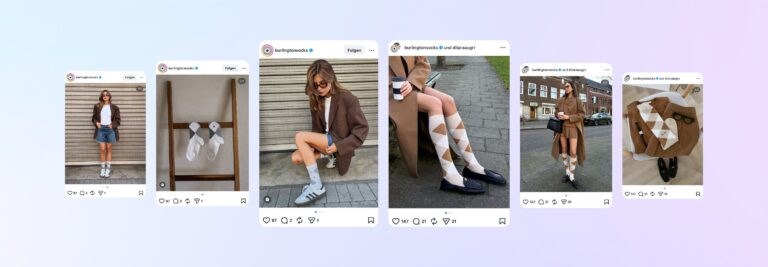
For context: a professional photo shoot with a model, photographer, location, stylist, post-production, and buyouts can easily run €5,000 to €15,000 — for one production, one look, one aesthetic. Creator collaborations replace many of those cost items while delivering something a traditional shoot structurally struggles to provide: variety.
Ten creators mean ten different settings, ten styles, ten faces — and content that feels like real content on social media, not like advertising.
That said, it’s not a license for cheap mass production. Creators who regularly work with brands are professionals in their own right — they know their platform, understand what performs, and produce social-first content with an instinct that’s hard to replicate in a studio. Underestimate that, treat creators as nothing more than a cheaper alternative to a shoot, and you give up exactly the potential that creator marketing is supposed to deliver. Done right, it’s not just more scalable — the content can go straight into paid social without looking like it came from there.
Conclusion: Budget Is an Investment, Not a Line Item
There’s no one-size-fits-all creator budget. What’s appropriate depends on the format, the industry, the usage rights, and the creator. But the most important lever is one that starts in the brief: the clearer and more realistic you are about what you need, the more precise the offers you’ll get back.
Anyone who wants to work with creators long-term should invest in fair compensation — not because it feels good, but because it pays off. Creators who feel valued become more reliable, more creative, and develop a genuine connection to your brand. And that, in the end, is exactly what sets creator marketing apart from paid advertising.